The father came back from the army and found his daughter sleeping in a pig shed
Thomas nodded without looking away from the window.
“Yes,” he said quietly. “Just got back.”
The driver glanced at him in the mirror, said nothing more, and focused on the road. Outside, the flat fields of Iowa rolled by, familiar and strange at the same time. Thomas felt like a guest in his own life.
When the bus stopped at the edge of the small town, he got off with stiff legs. The air smelled of wet soil and old wood. Home. Or what used to be home.
The house stood exactly where he remembered it, but everything else felt off. The paint was peeling. The front door was shut tight.
Then he heard it.
A thin cry. Weak. Coming from the back.
His heart slammed against his ribs as he walked around the house. Each step felt heavier than the last.
The pig shed was barely standing. One wall leaned inward, and the door hung crooked on one hinge.
Inside, on a pile of dirty straw, lay Emily.
Curled up. Barefoot. Her dress too thin for the cold.
For a moment, Thomas couldn’t breathe.
He had faced gunfire without flinching. He had watched men fall beside him. But this—this broke something deep inside.
“Emily,” he whispered.
She opened her eyes slowly. When she saw him, she didn’t cry louder.
She smiled.
“Dad,” she said, like she’d been waiting forever.
He lifted her into his arms, feeling how light she was. Too light. Her bones pressed against him through the fabric.
“Why are you here?” he asked, his voice shaking despite himself.
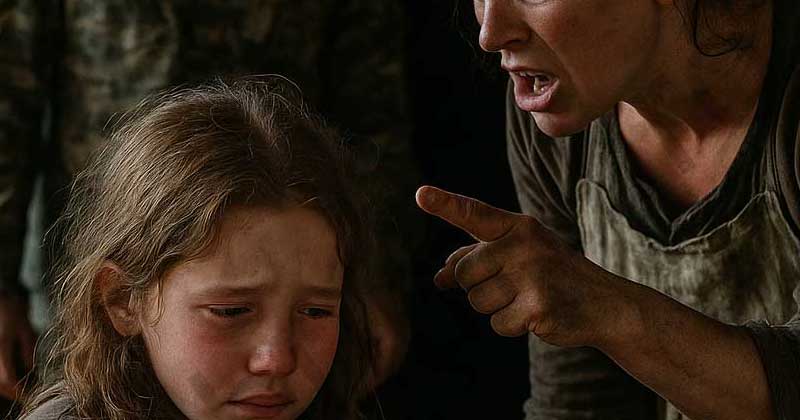
“She said I was dirty,” Emily murmured. “And pigs don’t mind.”
Thomas closed his eyes.
He carried her into the house through the back door, just like the letter said. Inside, Miriam stood frozen, a dish in her hand.
“You’re early,” she said.
Thomas didn’t raise his voice. He didn’t yell. That scared her more than shouting ever could.
“I read the letters,” he said.
Her face drained of color.
That night, the town heard things it hadn’t heard before. Not screams. Not fights.
Truth.
By morning, Miriam was gone.
Thomas sold the old truck, his watch, even his service medals. He counted the money on the kitchen table—$4,200 in wrinkled bills.
It wasn’t much. But it was a start.
He cleaned the house himself. Fixed the shed, then tore it down. Built Emily a small room with his own hands. Painted the walls yellow because she said it felt like the sun.
Neighbors started stopping by. At first out of curiosity. Then to help.
A mattress appeared. Then warm blankets. Someone left groceries on the porch. Eggs included.
Emily started eating again. Slowly. Carefully. Like she didn’t trust the food to stay.
Thomas found work at a local repair shop. Long hours. Honest pay.
Every night, he sat beside Emily’s bed until she fell asleep.
Weeks passed. Then months.
One evening, as the sun went down, Emily handed him a piece of paper.
“I wrote you something,” she said.
He unfolded it with the same careful hands he used overseas.
“Dad,” it read, “I don’t sleep with pigs anymore. I sleep at home.”
Thomas pressed the paper to his chest.
The town never forgot what happened. But it learned something.
That strength isn’t always loud.
Sometimes, it comes home on a dusty bus, carrying letters that were never sent—and finally reads them.