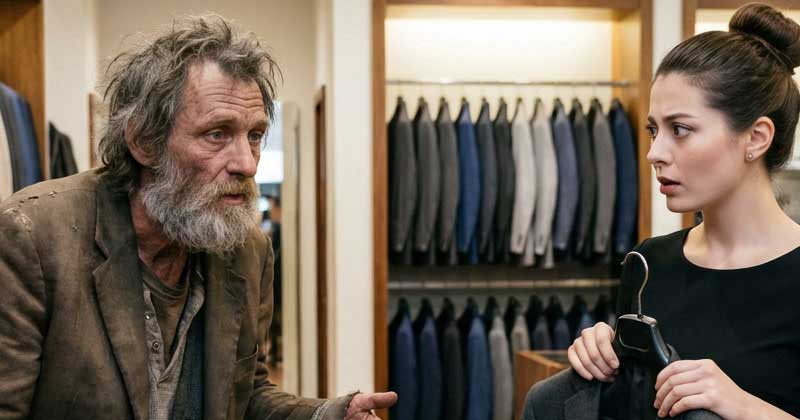
The stale, sour smell hit the room before he did
The sound it made when it touched the glass counter was soft, almost polite. A folded, yellowed piece of paper. Old. Worn thin at the edges. The kind of paper people used decades ago, back when a handshake meant something and a promise was worth more than a contract.
The manager, Susan, stared at it without touching it. Her lips trembled.
“I… I don’t understand,” she whispered.
The man finally lifted his eyes from the suit. They were clear. Calm. Too calm for someone who looked like he’d been sleeping under bridges.
“Open it,” he said.
Her fingers shook as she unfolded the paper. Her breath caught.
It was a handwritten IOU. A debt note. Dated over twenty years ago. Signed by her father’s name.
Around us, customers leaned closer. You could hear someone swallow. Another person’s phone slipped from their hand and hit the floor.
“This isn’t possible,” Susan muttered. “My father passed away.”
“I know,” the man said. “I was there.”
She looked up at him, really looked this time. Not at the coat. Not at the beard. At the face underneath it all.
“You’re… you’re Michael,” she said slowly.
He nodded once.
Back then, Michael hadn’t been a nobody. He’d owned half a dozen auto shops outside Cleveland. He’d employed Susan’s father when no one else would. When the recession hit hard and banks started taking homes, Michael had loaned him $30,000 in cash. No interest. No lawyers. Just that piece of paper and a promise: I’ll pay you back when I can.
But life had other plans.
The factories closed. Michael lost everything trying to keep his workers paid. His marriage fell apart. Then came the hospital bills. Then the streets.
“Why now?” Susan asked, her voice cracking. “After all these years?”
Michael reached into his pocket again. This time, he pulled out a thick envelope. He set it next to the paper.
“I sold the land my mother left me,” he said. “It took me twenty years to find a buyer. But a debt is a debt.”
Susan opened the envelope. Inside were neatly stacked bills. Fifty-dollar notes. Counted. Organized.
$30,000. Exact.
Her knees buckled. She grabbed the counter to steady herself.
Security had arrived, but they stood frozen, unsure what to do.
“You don’t owe us anything anymore,” Susan said through tears. “My father used to say you saved his life.”
Michael shook his head. “He saved mine too. By trusting me.”
The store felt different now. Smaller. Quieter. Human.
Susan closed the register and walked around the counter. She did something no one expected. She hugged him. Right there, in front of everyone.
“I’m sorry,” she said. “For how I treated you.”
Michael gave a small smile. “I’ve been called worse.”
She wiped her eyes, then straightened up. “Pick any suit you want,” she said. “It’s on me.”
He hesitated. “I don’t need luxury.”
“You need dignity,” she replied. “And a fresh start.”
He chose a simple navy suit. Nothing flashy. Clean. Solid. Like him.
An hour later, Michael walked out of the store a different man. Clean-shaven. Hair trimmed. Shoulders back.
Outside, the city kept moving. People rushing. Horns blaring. Life going on.
Michael paused on the sidewalk and looked up at the sky. For the first time in years, he felt light.
That night, Susan called her kids and told them a story her father used to tell. About a man who lost everything but never lost his word.
And Michael? He didn’t become rich again. He didn’t need to.
A week later, he started working at a small repair shop in Ohio. Honest work. Steady pay. A place where people still believed that doing the right thing mattered.
Because sometimes, what brings you back from nothing isn’t money.
It’s keeping a promise when no one expects you to.